
If you attend a family gathering in Malaysia—whether it’s a Chinese New Year reunion dinner or a Hari Raya open house—there is one conversation you are almost guaranteed to overhear: an older auntie or uncle complaining about their knees.
It is practically a national ailment. We often dismiss it as a natural part of aging or perhaps blame it on weight gain. But if you look at the statistics, something unique is happening here.
In Western countries like the UK or USA, joint replacement surgeries are fairly evenly split between hips and knees. In Malaysia, however, the numbers are overwhelmingly skewed. Knee replacements account for a staggering 80% to 90% of all joint surgeries here.
Why do Malaysian knees fail so much more often than hips? The answer isn’t just about diet or lifespan. It lies in a distinct anatomical and cultural reality known among orthopedic surgeons as the “Asian Knee.” Asian knees affect predominantly older Chinese females, which also explains why a lot of total knee replacement surgeries are performed on Chinese women above the age of 50 years old.
Understanding this phenomenon is the key to fixing it— and by reading this article, you will find out how debilitating the Asian knee phenomenon is to the women of Chinese ethnicity in Malaysia.

What Exactly is the “Asian Knee”?
The “Asian Knee” isn’t a medical defect. It is simply a distinct anatomical profile (caused by genetical factors) common in East and Southeast Asian populations. It differs from the “Caucasian Standard”—which most early medical textbooks were based on—in three critical ways.
1. The Shape: Narrow and Compact
Imagine a square box versus a rectangular box. Western thigh bones (femurs) tend to be wider and boxier at the knee joint. Asian knees are generally narrower from side to side.
For decades, this posed a problem. Surgeons used standard Western implants that were too wide for Asian patients. This caused “overhang”—where the metal edge of the implant stuck out, rubbing against sensitive tendons and causing chronic pain.
2. The Alignment: The “O-Leg” (Varus)
While Westerners often develop knock-knees (Valgus) as they age, Malaysians overwhelmingly present with bow-legs, known medically as Varus deformity.
If you stand with your ankles touching and there is a distinct gap between your knees, you have this alignment. In Malaysia, this is incredibly common, driven by both genetics and lifelong habits.
3. The Lifestyle: The Demand for “High Flexion”
This is the cultural connector. The Western lifestyle of sitting on chairs and using raised toilets only requires a knee to bend about 110 degrees.
The Malaysian lifestyle is different. Squatting for the toilet, sitting sila (cross-legged) on the floor for a meal, or performing sujud (prostration) during prayer requires deep flexion of 130 to 155 degrees. A “standard” knee replacement often cannot bend this far, leaving patients physically unable to perform their cultural or religious duties.
Asians Have Different Knee Structures than Their Western Counterparts
Why do these factors lead to such high rates of surgery? It comes down to simple physics.
Think of your legs like the tires on a car. If the wheel alignment is perfect, the tire tread wears down evenly over many years. If alignment sudah lari, then it’s normal for excessive wear to occur to your knee cartilage. This is because of the “O-Leg” (Varus) alignment common in the Asian Knee, the body’s weight is not shared 50/50 across the knee. Instead, up to 90% of your body weight is shifted onto the inner (medial) side of the knee.
This concentrated pressure grinds down the inner cartilage prematurely. This explains the “Obesity Paradox” we often see in Malaysia: very thin aunties who still suffer from severe, bone-on-bone arthritis which leads to unbearable amounts of pain that they have to deal with day-to-day. Their weight isn’t the problem—their mechanical alignment is. The wheel was tilted, so the inner tread wore out.
Do You Need Surgery Yet?
Just because you have “Asian Knees” or some pain doesn’t mean you need a knee replacement tomorrow. Doctors in Malaysia generally follow a “ladder” of treatment, escalating only when your quality of life takes a hit.
Level 1: Buying Time (Non-Surgical) If your arthritis is early-stage, (and lifestyle changes and supplementation no longer alleviate the pain) the goal is to preserve your natural knee.
- Lose as much weight as possible: This is the single most effective natural intervention to reduce inflammation. Because of the mechanical disadvantage of the “O-leg,” every kilogram you lose offloads significant pressure from that inner knee.
- Injections (Gel & PRP): Hyaluronic acid (gel) acts as a lubricant, while Platelet-Rich Plasma (PRP) uses your blood’s healing factors to soothe inflammation. These are very popular in Malaysian clinics and can often buy you years of relief before surgery is needed.
Level 2: The “Realignment” (High Tibial Osteotomy) This is a great treatment for younger patients (often under 55) who have severe bowing but healthy cartilage on the outside of the knee.
- How it works: Instead of replacing the knee, the surgeon cuts the shinbone (tibia) and wedges it open slightly to straighten the leg.
- The Benefit: Going back to our car analogy—this fixes the alignment without changing the tire. It shifts your weight to the healthy side of the knee, preserving your natural joint for high-impact activities like running or heavy work.
Level 3: The Replacement (TKR) When the cartilage is completely worn away (“bone-on-bone”) and the pain keeps you awake at night, replacement is the definitive solution. This is where the specific Malaysian surgical approach becomes critical.
The Malaysian Solution: Tailoring Surgery to Anatomy
The good news is that orthopedic surgery in Malaysia has evolved greatly over the years to recognize and treat this specific condition caused by the Asian Knee Phenomemon. We are no longer using “one-size-fits-all” Western solutions.
Here is how modern surgery in Malaysia addresses the Asian Knee:
1. Asian-Fit and Gender-Specific Implants
Leading hospitals in Malaysia now routinely use implants with narrower profiles. These are designed to match the Asian aspect ratio, ensuring the metal cap fits the bone perfectly without any painful overhang.
2. The Rise of Robotics
Correcting a severe “O-leg” curvature is difficult. If a surgeon corrects it too much, the leg becomes stiff; too little, and it remains unstable and then more pain and problems follow post surgery.
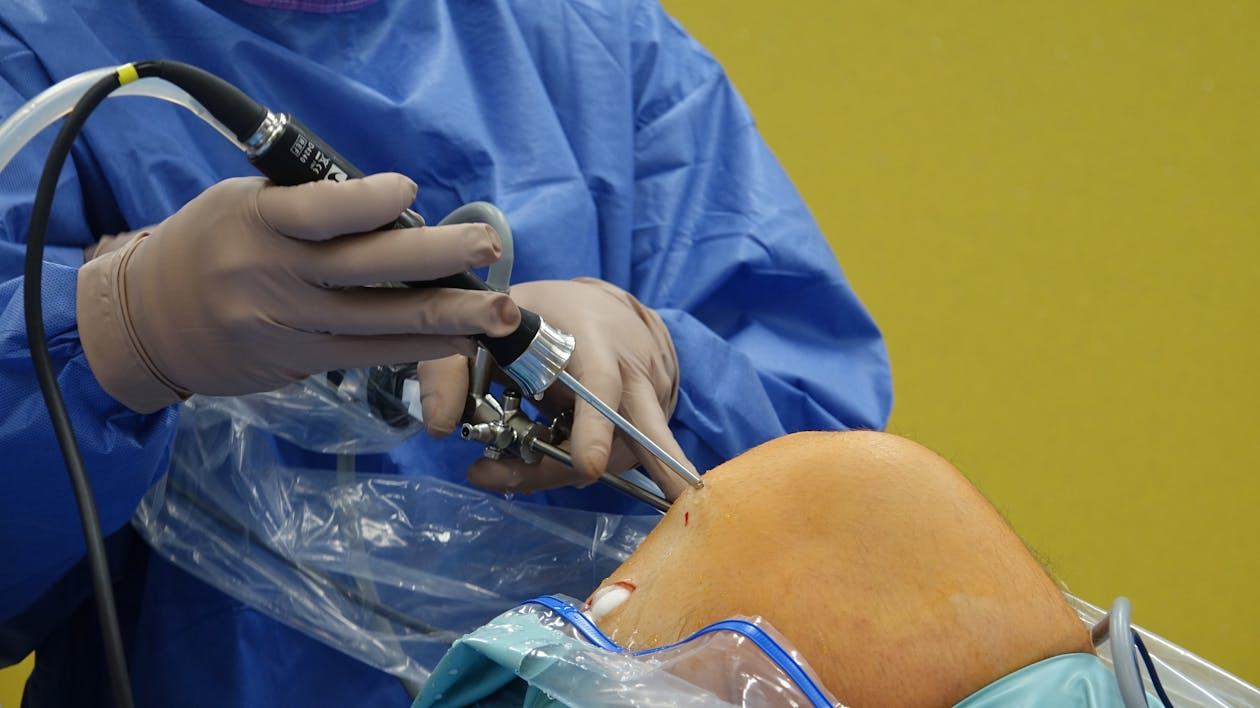
This challenge has driven the rapid adoption of robotic surgery (such as MAKO or ROSA systems) in Malaysia. These robots allow surgeons to create a 3D map of the patient’s bone and execute cuts with sub-millimeter precision. For the severe deformities seen in Asian patients, robotic assistance is becoming the gold standard.
3. Prioritizing High Flexion
Surgeons here understand that “walking pain-free” isn’t the only goal. You want to sit on the floor again. Modern surgical techniques in Malaysia specifically target high range of mobility outcomes, using high tech scanners and robotics to generate specific implant designs and utilise soft-tissue release methods to maximize the bend/flexibility for the patient.
Interesting Facts and Figures
The “Knee-First” Skew In Malaysia, knee replacements account for approximately 80% to 90% of all joint replacement surgeries, a stark contrast to Western countries where hip and knee procedures are nearly equal (1:1 ratio). This disparity highlights the specific “Asian Knee” phenomenon, where mechanical alignment issues (varus deformity) cause knees to fail long before hips do.
High Disease Burden & Demographics It is estimated that 10% to 20% of the Malaysian adult population suffers from knee osteoarthritis, with the burden falling disproportionately on women, who make up nearly 80% of surgical cases. Among ethnic groups, Chinese Malaysian females represent the largest single subgroup undergoing this surgery, often presenting with severe “bone-on-bone” arthritis at a relatively young age (mean age of 60–65).
Rising Demand With Malaysia having the highest obesity rate in Southeast Asia (over 50% of adults are overweight or obese) and an aging population, the annual volume of knee replacements is projected to rise significantly. Public hospitals alone handle thousands of these cases annually, often with waiting lists stretching from 6 months to over 2 years due to this overwhelming demand.
Why the High Prevalence of Knee Problems in Chinese Malaysian Women?
The disproportionate prevalence among Chinese Malaysian females is driven by a “perfect storm” of genetic predisposition, unique anatomy, and hormonal changes. Anatomically, this demographic tends to have smaller, narrower skeletal frames combined with a higher rate of Varus (“O-leg”) deformity, a mechanical misalignment that forces the inner knee to bear 70–90% of the body’s load. This structural disadvantage is compounded by a specific genetic susceptibility to cartilage degeneration and the post-menopausal drop in estrogen, which accelerates joint deterioration. When these biological factors meet a lifetime of high-flexion cultural activities—such as squatting or using low stools—the result is rapid, severe “wear and tear” that destroys the joint often before the hips or other joints are affected.

Cost of Total Knee Replacement Surgery in Malaysia
In Malaysia, there are just two options for treatment: private vs public option. In government hospitals (such as Hospital Kuala Lumpur or Hospital Sungai Buloh), the surgery is highly subsidized. Patients typically only pay for the implant itself and a nominal ward fee, bringing the total to approximately RM10,000 to RM15,000. However, the trade-off is time. Due to the high volume of cases, waiting lists can stretch from six months to over two years—a long time to wait if you are already in daily pain. In order to decide whether to go the public or private treatment route, you will have to weigh the cost of the surgery at private healthcare hospitals vs the extended waiting time (which means months or years of suffering in pain in your day to day activities) associated with long waiting list at public hospitals.
Private hospitals offer immediate scheduling—often within a week—but at a premium. A standard Total Knee Replacement typically ranges from RM35,000 to RM50,000 for a single knee. If you opt for the robotic-assisted surgery mentioned earlier (which is highly recommended for severe “Asian Knee” varus deformities), expect to add another RM10,000 to RM15,000 to the final bill depending on the robotic system used.
Finally, a note on insurance: If you have a medical card, check your policy’s “prosthesis limit.” While the surgery fees are usually covered, some older policies have a cap on how much they will pay for the implant itself (e.g., capped at RM10,000), leaving you to top up the difference for premium “High-Flex” or “Asian-fit” devices.

When choosing a hospital for Total Knee Replacement (TKR) in Malaysia, your decision largely splits into two paths: Private (Speed & Technology) or Public (Affordability & Expertise).
Here is a list of the leading, most reputable hospitals – both private and public for total knee replacement surgeries:
Private
Best for: Immediate surgery, robotic technology (MAKO/ROSA), and private rooms.
1. Sunway Medical Centre (Sunway City)
- Why it’s top-tier: They have established themselves as a regional “Quaternary Centre” for orthopedics. They are one of the few hospitals to house both major robotic systems (MAKO and ROSA), giving surgeons flexibility in handling complex “Asian Knee” deformities.
- Key Feature: High volume of cases (hundreds per year), meaning nursing staff are highly experienced in post-op knee rehab.
2. Subang Jaya Medical Centre (SJMC)
- Why it’s top-tier: A pioneer in the field, SJMC was the first in Malaysia to perform daycare (same-day discharge) TKR in selected cases. They have a very high concentration of senior consultants who are often key opinion leaders in the region.
- Key Feature: Known for “Fast Track Recovery” protocols and early adoption of MAKO robotic arms.
3. ALTY Orthopaedic Hospital (Kuala Lumpur)
- Why it’s top-tier: This is a Single-Specialty Hospital. Unlike general hospitals where you might be next to a dengue patient, ALTY focuses exclusively on bones and joints.
- Key Feature: The entire facility—from the low-height beds to the bathroom grab bars—is designed specifically for orthopedic patients. The infection rates are typically lower due to the specialized nature of the facility.
4. Gleneagles Hospital Kuala Lumpur
- Why it’s top-tier: A premium choice often favored by international patients and those with complex medical histories (e.g., heart issues) due to their strong multi-disciplinary support (ICU/Cardiology backing).
- Key Feature: Home to some of the most senior/veteran orthopedic surgeons in the country.
Public
Best for: Low cost (RM10k–15k), provided you can wait 6–24 months.
1. Hospital Kuala Lumpur (HKL)
- Why it’s top-tier: As the national referral center, HKL handles the “impossible” cases that private hospitals often reject (e.g., severe infections, massive bone loss). If they can fix those, they can fix a standard knee.
- Trade-off: Very long waiting list and crowded “open wards” (6–8 beds).
2. Hospital Sungai Buloh
- Why it’s top-tier: Designated as the Ministry of Health’s “Centre of Excellence” for Trauma and Orthopedics. The surgical teams here are exceptionally skilled due to the sheer volume of trauma and reconstruction work they perform daily.
- Trade-off: Located further from the city center; high patient load.
The “Hybrid” Option
Best for: Getting “Professor-level” expertise without the full luxury price tag.
1. UMSC (UM Specialist Centre) / UMMC Private Wing
- What is it? This is the private arm of the University Malaya Medical Centre (PPUM).
- Why choose it: You are operated on by University Professors—the specialized surgeons who teach other surgeons. They often handle the most complex deformities using the latest evidence-based techniques.
- Cost: Generally slightly lower than premium private hospitals like Gleneagles/Prince Court, but with elite-level surgical expertise.
Summary Comparison
| Feature | Private Hospital (e.g., Sunway/SJMC) | Public Hospital (e.g., HKL) | Hybrid (e.g., UMSC) |
| Wait Time | < 1 Week | 6 Months – 2 Years | 1 – 3 Weeks |
| Est. Cost | RM 35,000 – RM 60,000 | RM 10,000 – RM 15,000 | RM 25,000 – RM 40,000 |
| Technology | Robotics Standard (MAKO/ROSA) | Standard Manual Instrumentation | Advanced Manual / Navigation |
| Surgeon | You Choose Your Doctor | Assigned by Team | You Choose (Professor) |
Conclusion:
In this article, we discussed the high prevalence of total knee replacement surgeries in Malaysia due to the Asian Knee phenomenon – which is largely caused by genetics, made worse with certain lifelong lifestyle habits. We then explored the major treatments for mild, moderate and severe arthritis in the knees. Lastly, we also touched on the costs of treatments at both public and private hospitals for TKR.






Leave a Reply